

Paid time off is often treated as a policy detail. It sits in a handbook, appears during onboarding, and gets referenced when someone submits a request for vacation or sick leave. But for HR leaders, PTO should be viewed as much more than an administrative category. It is one of the most visible ways an organization communicates trust, fairness, expectations, and respect for the people who make the business run.
In small and midsize businesses especially, PTO has an outsized impact. These organizations may not always compete on salary alone. They may not have the layered benefit offerings of larger employers. What they can do, however, is create people practices that feel thoughtful, practical, and fair. PTO is one of those practices. When it is designed well, it supports retention, encourages healthier work habits, reduces policy friction, and strengthens the employee experience. When it is designed poorly, it often creates confusion, inconsistency, and preventable frustration that spills into morale and turnover.
That is why PTO deserves a more strategic lens.
For many employers, the conversation about PTO starts too late and too narrowly. It begins when employees raise questions, when managers start applying the policy differently, or when HR realizes the existing structure no longer fits the workforce. By then, the policy is already affecting culture. Employees have formed opinions about whether time away is truly supported. Managers have developed their own habits around approval and coverage. HR is left trying to restore consistency after trust has already begun to erode.
A more effective approach is to treat PTO as part of a broader workforce strategy from the start. The goal is not simply to decide how employees earn time off. The goal is to create a model that aligns with how the business operates, how managers lead, and how employees actually experience work. That is where PTO becomes more than a benefit. It becomes part of the infrastructure that helps attract talent, retain employees, and sustain a healthier organization over time.
Content
- Why PTO Strategy Deserves a Bigger Place in HR Planning
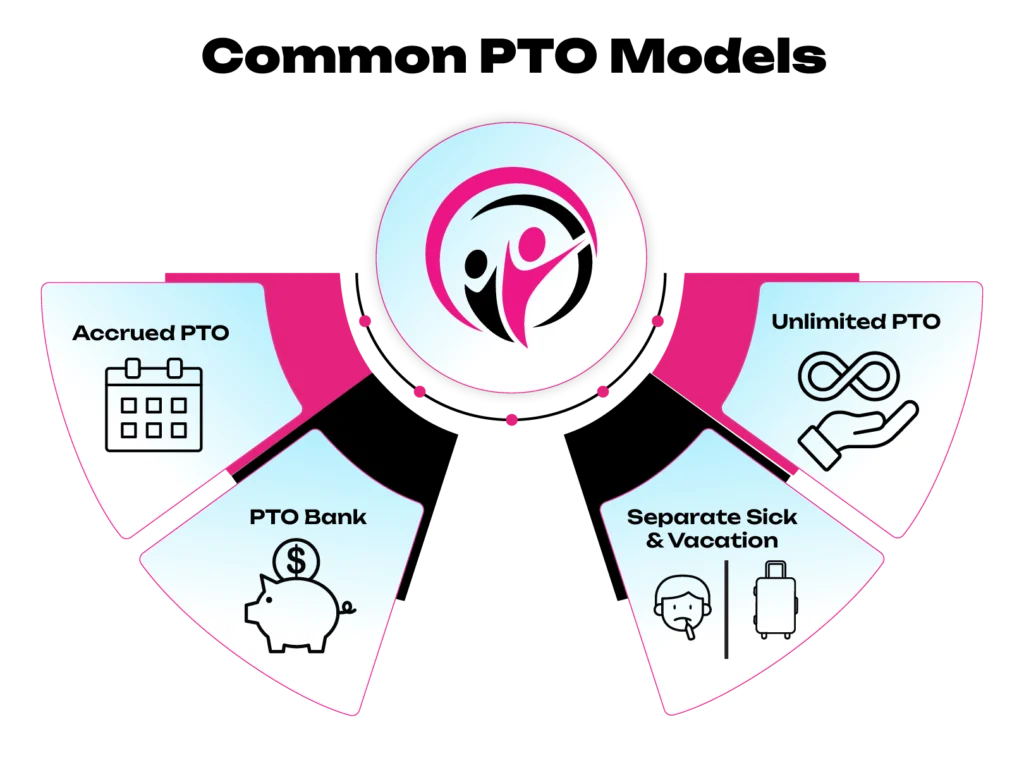
- The Most Common PTO Models and What They Signal to Employees
- How HR Leaders Should Choose the Right PTO Model
- Why Poorly Designed PTO Policies Create Bigger Workforce Problems
- PTO as a Retention, Culture, and Sustainability Strategy
- Final Thoughts
- Frequently Asked Questions About PTO Models
Why PTO Strategy Deserves a Bigger Place in HR Planning
There was a time when PTO could be seen primarily as a tracking issue. An employee earned a certain number of hours. Someone kept a record. Payroll reflected the appropriate balances and payouts. While the mechanics still matter, that frame is no longer enough.
Today, PTO sits at the intersection of several critical HR priorities. It affects employee wellbeing, manager consistency, scheduling, fairness, policy clarity, and even employer reputation. Candidates increasingly pay attention to how an employer talks about time away. Employees pay even closer attention to how that policy is actually lived out. A handbook may say that flexibility matters, but employees will judge the organization by whether taking time off feels encouraged, awkward, or quietly penalized.
This is where many businesses underestimate the role of HR. PTO is not simply a matter of offering a certain number of days. It is about making sure the policy is usable, understandable, and equitable across the organization. Employees should not need to decode policy language, negotiate exceptions, or wonder whether their manager applies the rules differently than someone else’s manager. The more uncertainty people feel around time off, the more PTO begins to lose its intended value.
Well-designed PTO policies create stability in ways that are easy to overlook. They give employees confidence that rest is legitimate, not suspicious. They give managers a framework for making decisions consistently. They reduce the number of small employee-relations issues that can build into larger frustrations over time. And they help HR move out of constant interpretation mode and into a more strategic role.
In that sense, PTO is not just a benefit issue. It is an organizational health issue. It reveals whether the company has built people practices that are clear enough to scale and fair enough to trust.

The Most Common PTO Models and What They Signal to Employees
There is no single PTO model that works for every employer. The right fit depends on workforce structure, operational complexity, leadership habits, and the degree of flexibility the organization can realistically support. But each model does more than shape administration. It also sends a message to employees about how the company thinks about time, trust, and fairness.
Traditional Accrued PTO
Traditional accrued PTO remains one of the most common models, particularly in organizations with hourly employees, mixed workforce structures, or a strong need for predictability. Under this approach, employees earn time gradually based on hours worked, pay periods, or length of service.
From an HR perspective, accrued PTO offers structure. It is measurable, relatively easy to forecast, and often easier to administer consistently across a broad employee population. Employees can see their time building over time, which can create a clear sense of what has been earned.
At the same time, accrued PTO can feel transactional if it is not communicated well. Employees may become overly cautious about using time because they feel they need to preserve it. If balances, rollover rules, or waiting periods are not clearly explained, what should feel orderly can start to feel confusing. This model works best when the organization values clarity and consistency and has the communication discipline to ensure employees understand how the policy works in practice.
Front-Loaded PTO
A front-loaded model gives employees access to a block of PTO at the start of a year, anniversary cycle, or eligibility period. This often feels more generous because it gives employees access to meaningful time off sooner rather than asking them to wait for balances to build gradually.
For HR leaders, front-loaded PTO can be appealing because it simplifies the employee experience. Employees do not have to calculate accruals every time they want to plan a trip or schedule needed time away. The policy is easy to explain, and for many salaried workforces, it aligns well with a straightforward, trust-based culture.
Still, simplicity on the front end requires thoughtful policy design on the back end. Organizations need clear rules for new hires, partial-year eligibility, and situations where an employee uses more time than they would have earned proportionally before separating from the company. Front-loading can work very well, but only when the administrative decisions behind it are just as clear as the employee-facing message.
PTO Bank Model
In a PTO bank model, vacation, personal time, and sick time are combined into a single bucket. This approach is often attractive because it reduces complexity and gives employees more autonomy over how they use their time.
On the surface, the value is obvious. The policy is easier to understand. Employees have more flexibility. HR has fewer categories to manage. For organizations trying to create a smoother employee experience, a PTO bank can feel like a practical middle ground between rigid structures and open-ended flexibility.
The deeper HR question, however, is how employees respond to that flexibility. In some workplaces, combining leave categories helps employees manage time more naturally. In others, employees become reluctant to use time for illness because they do not want to reduce days they were hoping to use for vacation. This does not automatically make a PTO bank a poor choice, but it does mean policy design should be informed by employee behavior, not just administrative convenience.
Tiered PTO by Tenure
Tiered PTO structures increase available time off based on years of service. This model is often used to support retention and reward loyalty, particularly in organizations where long-term employee relationships are central to stability and performance.
There is a strong strategic case for tenure-based PTO in the right environment. It signals that long-term commitment matters. It helps deepen the overall rewards package for experienced employees. And it can reinforce the idea that staying with the organization has tangible value.
But the design has to be balanced. If the early-career offering feels too thin, newer employees may not view the policy as motivating. They may simply see it as less competitive. The best tiered models acknowledge tenure without making the gap between groups so wide that the policy creates distance rather than aspiration.
Flexible or Unlimited PTO
Flexible or unlimited PTO is often seen as the most modern option. It suggests trust, autonomy, and a results-oriented approach to work. In recruiting conversations, it can sound highly attractive. But from an HR standpoint, it is also the model most likely to succeed or fail based on culture rather than policy wording.
That is because unlimited PTO only works when the organization has the management maturity to support it. Employees need clear expectations. Managers need training. Workloads need to be realistic. Leaders need to model taking time off themselves. Without those conditions, unlimited PTO can easily become vague PTO. Employees may not know what amount of time is considered acceptable. Some may take less time off than they would under a more traditional structure because they do not want to appear less committed. Others may experience approval decisions that feel subjective or uneven.
For that reason, unlimited PTO should not be treated as inherently progressive. It can be a strong fit for some organizations, especially those with experienced managers and strong cultural consistency. But it is not a shortcut to becoming a more employee-centered employer. In the wrong setting, it creates more ambiguity than flexibility.
How HR Leaders Should Choose the Right PTO Model
Choosing a PTO model should begin with organizational reality, not trend-watching. A policy that works beautifully in one workplace can create friction in another. The question is not which model seems most appealing in theory. The question is which model the organization can administer clearly, apply fairly, and sustain over time.
Start With Workforce Structure
A business with a largely hourly workforce, variable scheduling, or significant coverage demands may need a more defined PTO model than a business made up primarily of salaried professionals. Likewise, a nonprofit, a field-service organization, and a professional services firm may all require different levels of predictability and flexibility. The best PTO models reflect how work actually gets done, not how leadership wishes it worked.
Evaluate Manager Capability
The more flexible a PTO model becomes, the more it relies on manager judgment. That is not necessarily a problem, but it does raise the stakes. If managers are not trained to apply policies consistently, employee trust can erode quickly. Two employees in different departments may technically have the same benefit but experience it in completely different ways. When that happens, the issue is no longer the policy on paper. It is the inconsistency of leadership practice.
Prioritize Policy Clarity
A policy may be well designed and still underperform if employees do not understand it. Clarity matters. Employees should know how time is earned or granted, how requests are submitted, what the approval process looks like, and whether there are any important limits on usage. The more guesswork involved, the more the employee experience suffers.
Align the Policy With Desired Behavior
Some PTO models reinforce predictability and advance planning. Others emphasize flexibility and autonomy. Others reward tenure and long-term commitment. None of these goals are wrong, but they are not interchangeable. A good policy starts with the question of what kind of workplace behavior and culture the organization is trying to support.
Make Sure Operations Can Support the Policy
A company may say it values time away, but if staffing is chronically thin or cross-training is weak, every PTO request becomes a disruption. That creates silent pressure on employees not to use their time. In that case, the real issue is not the PTO model itself. It is the mismatch between policy aspiration and operational readiness.
Why Poorly Designed PTO Policies Create Bigger Workforce Problems
PTO issues rarely stay contained. What begins as a small question about balances, approvals, or carryover can quickly become a deeper issue involving fairness, manager credibility, and employee trust.
Inconsistency Erodes Trust
Even a well-intentioned organization can end up with wildly different experiences across departments if managers are left to interpret the policy on their own. One manager may encourage employees to use time regularly. Another may make every request feel disruptive. One team may plan coverage well in advance. Another may treat absences as a burden. Employees notice these differences quickly, and once they do, PTO stops feeling like a standard benefit and starts feeling like a matter of managerial luck.
Complexity Creates Friction
When eligibility rules, accrual rates, rollover caps, and exceptions become difficult to understand, employees tend to lose confidence in the fairness of the system. They may not challenge it immediately, but uncertainty creates friction. HR then spends more time fielding clarifying questions, correcting assumptions, and addressing avoidable misunderstandings.
Poor PTO Design Can Contribute to Burnout
If employees feel uncomfortable taking time away, the business may appear stable in the short term while actually accumulating burnout. Teams that do not rest adequately often experience lower engagement, weaker collaboration, and higher turnover risk. A PTO policy cannot solve burnout on its own, but a poorly designed or poorly lived policy can contribute to it.
Small Issues Become Employee Relations Issues
For all of these reasons, PTO policy design should be seen as preventive HR work. It is one of the places where clear thinking upfront can spare the organization from a long trail of downstream employee-relations issues.

When your policy is set, we can help you track, pay, and report PTO accurately, without adding complexity.
>>Explore HRIS Solutions that Help You Manage PTO and Timekeeping in One Application<<
PTO as a Retention, Culture, and Sustainability Strategy
The strongest PTO policies do more than process time away. They reinforce the kind of culture the organization wants to build.
PTO and Retention
PTO matters for retention because employees evaluate benefits through lived experience, not just policy language. They want to know whether taking time off is realistic, whether managers apply the rules fairly, and whether the organization truly respects boundaries. A policy that looks competitive but feels difficult to use does little to strengthen loyalty. A policy that is clear, fair, and consistently supported often does more for retention than employers realize.
PTO and Culture
PTO matters for culture because it reflects organizational norms. If leaders take time off appropriately and encourage their teams to do the same, the policy gains credibility. If leaders praise balance but reward constant availability, employees will follow the behavior, not the message. In that sense, PTO policy becomes a mirror. It reflects whether the company’s people values are operationalized or merely stated.
PTO and Workforce Sustainability
PTO matters for sustainability because no workforce can perform at a high level indefinitely without recovery. Small and midsize businesses are particularly vulnerable here. Lean teams often rely heavily on individual contributors, and when those employees are stretched too thin for too long, the effects are immediate. Productivity may hold for a while, but engagement, resilience, and retention eventually suffer. A good PTO model helps create the conditions for sustainable performance rather than short bursts of productivity followed by exhaustion.
The Role of HR in Making PTO Work
This is where HR’s role becomes especially important. The work is not simply to choose a policy and publish it. It is to ensure the policy supports the workforce the organization has, the culture it wants, and the management practices it expects. When those pieces align, PTO becomes a meaningful part of the employee experience rather than just another administrative process.

Final Thoughts
PTO is easy to underestimate because it seems so familiar. Nearly every employer offers some version of it. Nearly every employee expects it. But familiarity should not be confused with simplicity. In practice, PTO is one of the most revealing policies an organization has. It shows whether people practices are clear or vague, equitable or uneven, practical or performative.
That is why HR leaders should give PTO the same level of thought they give other major workforce decisions. The right model can help attract talent, reinforce fairness, strengthen manager consistency, and support long-term workforce health. The wrong model can quietly create friction that touches morale, trust, and turnover.
The best PTO policy is not necessarily the most generous-sounding one or the most modern-looking one. It is the one that employees can understand, managers can apply consistently, and the organization can sustain without constant exceptions. When that happens, PTO becomes more than a benefit. It becomes part of a stronger and more credible people strategy.
For organizations taking a closer look at policy design, manager consistency, and overall people-risk exposure, a broader review of HR practices can help identify whether PTO is functioning as intended or signaling larger gaps that need attention.
A strong PTO policy should support fairness, retention, and compliance.
If it is not doing that today, an HR risk review can help uncover where gaps may exist.
Frequently Asked Questions About PTO Models
What Is the Best PTO Model for a Small Business?
The best PTO model for a small business is one that leaders can apply consistently, employees can understand clearly, and the organization can support without frequent exceptions. For many businesses, that means starting with a structured accrued or front-loaded PTO policy before moving to more flexible models. The right answer depends less on what is trending and more on how the workforce is structured, how managers lead, and how much policy clarity the organization can maintain over time.
Is Unlimited PTO Better for Employee Retention?
Unlimited PTO can support recruiting and strengthen employer brand perception, but it does not improve retention by itself. It works best when managers are trained well, workloads are realistic, and employees feel comfortable taking time off without negative consequences. In organizations where expectations are unclear or employees feel pressure to remain constantly available, unlimited PTO can actually lead to less time away, not more.
Should Vacation and Sick Time Be Combined Into One PTO Bank?
Combining vacation and sick time into one PTO bank can simplify administration and give employees more flexibility. It can also make the policy easier to understand. However, HR should ensure the policy is clearly communicated, practical for the workforce, and aligned with any applicable leave requirements. Organizations should also consider whether employees may become reluctant to use needed sick time if doing so reduces time they want to reserve for vacation.
How Often Should HR Review a PTO Policy?
HR should review a PTO policy at least once a year and anytime the organization experiences significant changes in workforce structure, manager practices, growth, or retention concerns. Repeated employee confusion, inconsistent approvals, or frequent exceptions are also signs that the policy deserves another look. A policy review is most useful when it considers not just the written language, but also how the policy is being experienced across teams.
When Should a Company Use Software to Manage PTO?
A company should consider software for PTO management when requests, balances, approvals, and reporting become difficult to manage manually. This usually happens when a growing workforce needs more consistency, visibility, and less administrative effort. The best use of technology is not to compensate for an unclear policy, but to support a policy that has already been designed thoughtfully and needs a more consistent operational framework.
If you need help with workforce management, please contact PeopleWorX at 240-699-0060 | 1-888-929-2729 or email us at HR@peopleworx.io
How Strong Is Your PTO Strategy?
PTO Models That Attract, Retain, and Sustain Talent can boost retention, support culture, and limit HR risk when policies are built with both people and compliance in mind. Take the HR Risk Assessment to see where your approach stands and identify opportunities to strengthen your workplace.
Take the HR Risk Assessment →Once your PTO policy is clearly defined, the right systems can help you manage requests, visibility, and consistency more efficiently. Explore Payroll & HRIS