
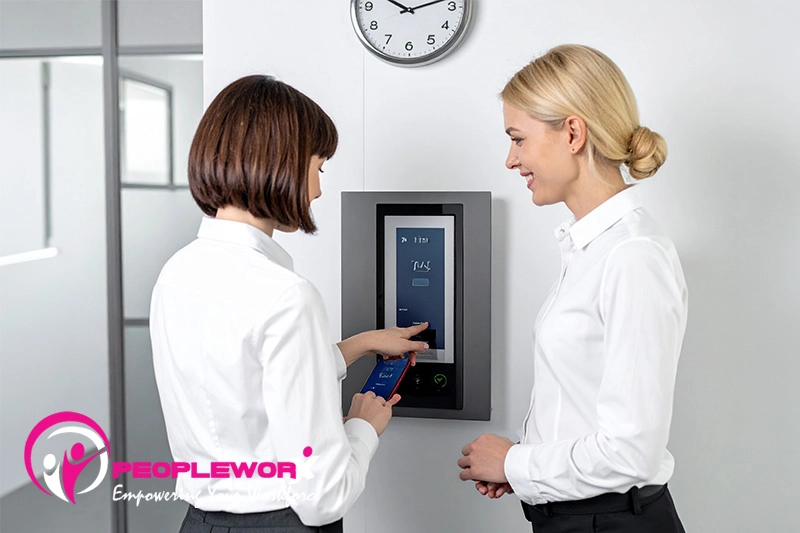
Workforce technology has always evolved in response to operational pressure. What is different in 2026 is the speed and the stakes.
Biometric timekeeping, once viewed as an emerging or optional capability, is now moving into the mainstream. Organizations are adopting fingerprint, facial recognition, and other biometric systems at a growing rate, driven by the need for greater accuracy, stronger accountability, and more efficient workforce management.
But beneath the surface, something more significant is happening.
Biometric timekeeping is not just a technology shift. It represents a fundamental change in how organizations collect, manage, and take responsibility for employee data. With that shift comes a new level of scrutiny, one that many organizations are not fully prepared for.
For HR leaders and business owners alike, the question is no longer whether biometric systems are effective. The question is whether the organization is equipped to manage the compliance, risk, and employee trust implications that come with them.
Content
- The Shift from Efficiency to Accountability
- The Expanding Compliance Landscape
- Where Risk Actually Emerges
- The Role of Employee Trust
- The Influence of AI and Emerging Technologies
- A More Intentional Approach to Workforce Technology
- Frequently Asked Questions: Biometric Timekeeping in 2026
- Final Perspective: HR’s Expanding Role in a Changing Landscape
The Shift from Efficiency to Accountability
Historically, timekeeping decisions were driven by efficiency. Employers wanted to reduce manual entry, eliminate payroll errors, and streamline administrative work. Biometric systems delivered on those goals by addressing common issues such as buddy punching and inaccurate time reporting.
In 2026, those benefits are no longer the primary driver.
Instead, organizations are turning to biometric timekeeping because they need greater certainty in their workforce data. As labor models become more complex, with remote work, multi-location teams, and variable schedules, traditional timekeeping methods are increasingly difficult to manage with confidence.
Biometric systems offer a level of verification that other methods cannot. They create a more direct link between the individual and the record of time worked. That level of accuracy has implications not just for payroll, but also for compliance, reporting, and organizational decision-making.
However, greater accuracy also introduces greater responsibility.

The Expanding Compliance Landscape
Biometric data is fundamentally different from other types of employee information. It is permanent, highly sensitive, and in most cases legally protected in ways that standard workforce data is not.
As a result, regulatory frameworks have expanded rapidly. Requirements around consent, data storage, retention policies, and employee notification are becoming more detailed and more strictly enforced.
What makes this particularly challenging is that these regulations are not uniform. They vary by jurisdiction and continue to evolve, often outpacing the policies organizations currently have in place.
For employers, this creates a moving target. Compliance is no longer about implementing a system that meets today’s requirements. It is about building processes that can adapt as expectations change.
This is where many organizations encounter risk, not because they lack technology, but because they lack the internal structure to support it over time.

Where Risk Actually Emerges
It is a common assumption that risk in biometric timekeeping is tied to system failure or data breaches. While those risks exist, they are not the most common source of exposure.
More often, risk emerges from everyday operational gaps.
An organization may implement a biometric system without fully documenting employee consent. Policies may exist, but they are not consistently communicated or enforced. Data may be stored securely, but access controls are not clearly defined. Over time, these small inconsistencies accumulate, creating vulnerabilities that only become visible under scrutiny.
In 2026, regulators and auditors are increasingly focused on these details. They are not just asking whether a system is in place. They are asking whether the organization can demonstrate control over how that system is used.
This shift places HR in a more central role. Timekeeping is no longer just an operational function. It is part of a broader compliance framework that requires coordination, oversight, and ongoing evaluation.
The Role of Employee Trust
Beyond compliance, biometric timekeeping introduces another critical factor, which is employee perception.
Unlike traditional timekeeping methods, biometric systems involve the collection of personal, immutable data. Even when implemented securely, this can create concern among employees who may not fully understand how their information is being used.
Organizations that approach implementation purely from a technical standpoint often underestimate this dynamic. Without clear communication, employees may view biometric systems as intrusive or unnecessary, which can impact engagement and trust.
Addressing this requires more than a policy document. It requires a deliberate effort to explain the purpose of the system, the safeguards in place, and the organization’s commitment to protecting employee data.
In many cases, the success of a biometric implementation is determined not by the system itself, but by how well the organization manages this conversation.
The Influence of AI and Emerging Technologies
Artificial intelligence is accelerating the capabilities of biometric systems, making them faster, more accurate, and more adaptable to different environments.
These advancements are solving many of the limitations that existed in earlier systems. They are also introducing new considerations.
AI-driven systems are capable of making decisions, such as verifying identity or flagging anomalies, that were previously handled through manual processes. This raises important questions about transparency, bias, and accountability.
Organizations must now consider not only whether their systems work, but also how they work. If a decision is challenged, it should be explainable. If a discrepancy occurs, it should be traceable.
These are not purely technical questions. They are governance questions that require input from HR, legal, and leadership teams.
A More Intentional Approach to Workforce Technology
The adoption of biometric timekeeping reflects a broader trend in workforce management. Organizations are becoming more intentional in how they select and implement technology, recognizing that these decisions have long-term implications.
There is a growing understanding that technology alone does not solve operational challenges. Without the right processes, oversight, and expertise, even the most advanced systems can introduce new complexities.
This is particularly true in areas like timekeeping, where compliance, payroll, and employee experience intersect.
For organizations navigating these decisions, the goal should not simply be to adopt new tools, but to ensure that those tools are supported by a framework that can sustain them.
Seasonal Surge, Zero Surprises:
Holiday hiring is high-pressure and mistakes in compliance, scheduling, or payroll get expensive fast. “How Retail Leaders Can Navigate Holiday Hiring Challenges with Smarter Workforce Practices” offers smart ways to scale seasonal staffing with confidence. Take the HR Risk Assessment to quickly spot gaps and reduce risk before the rush.
Spot Hiring Risks in under 1 Minute →Frequently Asked Questions: Biometric Timekeeping in 2026
What is biometric timekeeping and why is it becoming more important?
Biometric timekeeping uses unique biological identifiers to verify employee identity and track time worked. Its growing importance is tied to the increasing complexity of modern work environments. As organizations manage more distributed and dynamic teams, the need for accurate, reliable workforce data has become critical. Biometric systems provide a level of verification that supports not only payroll accuracy but also compliance and operational decision-making.
Are biometric timekeeping systems legal for employers to use?
Yes, but they are subject to strict and evolving regulations. Employers are generally required to obtain informed consent, clearly communicate how data will be used, and follow specific guidelines for storage and retention. The challenge lies in the pace of change. Regulations continue to develop, requiring organizations to maintain ongoing awareness and adapt their processes accordingly.
What are the most significant compliance risks?
The greatest risks are typically procedural rather than technical. Gaps in consent documentation, unclear policies, inconsistent enforcement, and limited oversight can all create exposure. As regulatory scrutiny increases, organizations must be able to demonstrate not just compliance in theory, but in practice.
Is biometric data secure?
Biometric systems can be highly secure, but they require a higher standard of data protection. Because biometric identifiers cannot be changed, the consequences of a breach are more significant. This places greater emphasis on encryption, access controls, and vendor management, as well as internal accountability.
What benefits can organizations expect?
Organizations often see improvements in payroll accuracy, reduced administrative burden, and stronger audit readiness. More broadly, biometric systems contribute to a more consistent and reliable approach to workforce management, particularly as operations scale.
What challenges should employers anticipate?
Challenges often include employee concerns around privacy, integration with existing systems, and the need for ongoing compliance management. Successfully addressing these challenges requires coordination across multiple functions and a commitment to continuous improvement.
How is AI shaping biometric systems?
AI enhances accuracy and efficiency while enabling advanced capabilities such as fraud detection. However, it also introduces new considerations around transparency and governance. Organizations must ensure they understand how these systems operate and how decisions are made.
What should employers evaluate before adopting a system?
Employers should assess compliance capabilities, data security practices, integration requirements, and internal readiness. The effectiveness of any system ultimately depends on the organization’s ability to support it with strong processes and oversight.
Are biometric systems replacing traditional methods?
While adoption is increasing, the transition is not universal. Some organizations continue to use hybrid approaches based on their workforce and regulatory environment. The broader trend is toward more intentional and risk-aware decision-making.
How can organizations stay compliant over time?
Sustainable compliance requires ongoing effort. Regular audits, clear documentation, policy updates, and cross-functional collaboration are essential. Organizations that treat compliance as a continuous process are better positioned to manage risk effectively.
Final Perspective: HR’s Expanding Role in a Changing Landscape
Biometric timekeeping is often introduced as a solution to operational challenges, but its impact extends far beyond efficiency.
It touches compliance, employee trust, data governance, and organizational accountability. As a result, the role of HR continues to expand. Decisions that were once purely administrative are now strategic, requiring a deeper understanding of risk and a more proactive approach to managing it.
Organizations that recognize this shift and respond with the appropriate level of structure and expertise are better equipped to navigate the complexities of today’s workforce environment.
If you need help with workforce management, please contact PeopleWorX at 240-699-0060 | 1-888-929-2729 or email us at HR@peopleworx.io