
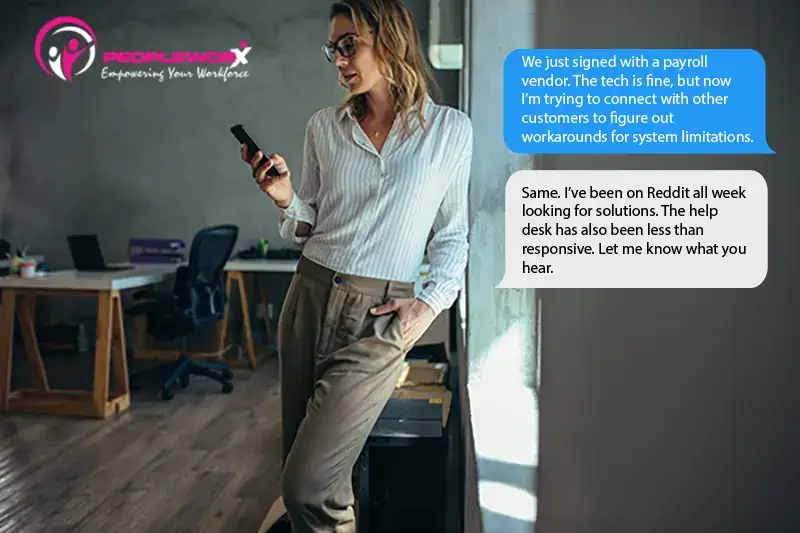
Payroll technology is necessary. But it’s rarely sufficient.
For many small and mid-sized businesses, payroll starts as a straightforward operational function: track hours, run pay, submit filings, keep employees happy, move on. Modern payroll platforms have made that early stage easier than ever. Automation, self-service portals, and integrated tax tools can reduce manual work and remove some of the stress from payday.
But as a business grows, payroll stops being a routine process and becomes something else entirely: a reflection of how well the organization manages complexity.
That complexity doesn’t arrive all at once. It tends to show up in small, seemingly manageable increments: a remote hire in a new state, a new pay type, a shift differential, a benefits change mid-year, a policy that exists in someone’s head but not in writing, a manager who approves time late, a worker whose role straddles exempt/non-exempt duties, or a classification decision made quickly during a hiring sprint.
When those “small” changes stack up, payroll becomes less about processing and more about risk, consistency, and decision-making. And that’s where the conversation needs to expand beyond software features.
Because at a certain point, the problem isn’t the platform.
The problem is that businesses are asking technology to solve what are ultimately people, policy, and compliance problems and those require informed judgment, not just workflows.
Content
- The misconception: “Better software will fix it”
- Where complexity actually comes from (and why it matters)
- The difference between support and partnership
- The multi-state tipping point: when payroll becomes compliance strategy
- Why HR expertise becomes a growth lever (not just a safety net)
- A practical lens: the “unusual situation” test
- What “hands-on” really means in the SMB context
- Frequently Asked Questions
The misconception: “Better software will fix it”
A common pattern in SMB growth is this: payroll becomes painful, so leadership assumes the solution is a new system. Sometimes a platform change is warranted. But often, the underlying issue isn’t the tool but it’s the absence of an operating model.
Payroll problems frequently originate upstream in HR and management practices:
- unclear policies around timekeeping, PTO, or pay eligibility
- inconsistent approvals or poorly defined manager responsibilities
- role and classification decisions that weren’t documented
- rapid hiring without standardized onboarding and setup steps
- employee changes (promotions, transfers, pay adjustments) happening informally
The payroll platform becomes the place where these issues surface because payroll is where everything must reconcile. But reconciliation isn’t the same as resolution. The system can calculate and record, yet it can’t tell you whether you’re applying policy consistently, whether a classification decision is defensible, or whether a new state hire triggered additional compliance obligations.
Technology executes. People decide.
And payroll, at scale, is simply the execution layer for a long chain of HR decisions.

Where complexity actually comes from (and why it matters)
Most SMB leaders don’t fear payroll because the math is hard. They fear payroll because the consequences of being wrong are immediate and personal.
If payroll is inaccurate, employees notice right away. Trust erodes quickly. The impact isn’t abstract. It’s emotional, reputational, and operational especially in smaller organizations where leaders and employees interact daily.
But accuracy isn’t just about calculation. It’s about setup, governance, and consistency:
- Are pay rules clearly defined and applied the same way across teams?
- Are hours captured correctly and approved on time?
- Are changes to pay, deductions, and benefits documented and communicated?
- Are compliance requirements understood before new scenarios are introduced?
These questions don’t live in a help center article. They live in an organization’s daily habits exemplified by how managers manage, how HR documents, how decisions are made, and whether the business has someone who can translate the “rules of the world” into clear internal processes.
That translation is what HR expertise provides.
The difference between support and partnership
Most platforms offer “support.” Support is often transactional: help navigating screens, resolving errors, and answering product questions. That has value. But in a growth phase, SMBs typically need something more durable than answers, they need guidance.
A hands-on HR partner model is fundamentally different because it focuses on:
- prevention instead of cleanup
- process design instead of task completion
- risk reduction instead of reactive fixes
- continuity instead of starting over each time
This matters because many payroll challenges aren’t one-time events. They are recurring patterns: late approvals, inconsistent job data, unclear policies, exceptions every cycle, or a growing list of “special situations” that nobody wants to touch because they’re complicated.
When a business has access to real HR expertise, the goal is not just to close tickets. The goal is to make payroll boring again and in the best possible way.
The multi-state tipping point: when payroll becomes compliance strategy
Few changes create more hidden complexity than hiring across state lines.
Multi-state payroll can appear simple at first: update withholding, register where needed, keep moving. But in practice, multi-state growth is where payroll and HR begin to merge into a shared compliance challenge.
Hiring in another state can introduce:
- different wage-and-hour rules (breaks, overtime thresholds, final pay expectations)
- new leave requirements and policy implications
- state-specific reporting requirements
- workplace posters and documentation expectations
- unemployment insurance and employer registration steps
This is why “we have payroll software” doesn’t necessarily mean “we’re covered.” A platform can store employee data and apply calculations, but it cannot evaluate whether a policy should be updated, whether a classification decision is appropriate for the role’s duties, or whether you’ve created a compliance gap simply by expanding your footprint.
Multi-state growth isn’t only an administrative event. It’s a governance event.
And governance requires expertise.
Why HR expertise becomes a growth lever (not just a safety net)
It’s easy to think of HR support as something you need only when you’re in trouble: during an audit, a dispute, a payroll mess, or a turnover spike. But for growing SMBs, HR expertise is often what separates controlled scaling from chaotic scaling.
Here’s what happens when expertise is present:
1) Decisions get documented.
When pay changes, classifications, and policies are documented consistently, the business becomes less dependent on memory and fewer things fall through the cracks.
2) Managers get aligned.
A significant portion of payroll complexity comes from inconsistent manager behavior. HR expertise helps create standards that managers can actually follow among them are clear deadlines, clear responsibilities, clear definitions.
3) Exceptions stop being normal.
Some businesses run payroll like a series of emergencies. Expertise helps reduce exceptions by fixing root causes: timekeeping practices, onboarding steps, data quality, policy clarity.
4) Compliance becomes proactive.
Instead of reacting to notices and surprises, the business starts anticipating risk areas: new states, changing headcount, new job types, evolving regulations.
Most importantly, HR expertise creates confidence. When leadership is confident that the process is sound, payroll becomes a stable foundation rather than a recurring stressor.
A practical lens: the “unusual situation” test
If you want a quick way to determine whether your current model is strong enough for where your business is headed, consider this question:
When something unusual happens, do you have expert guidance immediately? Or are you expected to figure it out?
“Unusual” is more common than most teams expect:
- a termination with final pay requirements and PTO payout questions
- a leave situation with pay and documentation implications
- a role change that affects exempt status
- a wage adjustment that raises internal equity concerns
- a new state hire with policy gaps
- a correction request that impacts taxes and reporting
The more your organization grows, the more these scenarios will appear. A platform can help you record the outcome. But it cannot help you decide the right outcome.
That’s why the most mature payroll and HR strategies treat technology as the infrastructure and expertise as the operating system.
What “hands-on” really means in the SMB context
In the SMB environment, “hands-on” doesn’t mean complex consulting or theoretical frameworks. It means practical help that turns ambiguous situations into clear next steps, and clear next steps into repeatable processes.
It means being able to answer questions like:
- “What should our policy be, given how we actually operate?”
- “How do we roll this out so managers follow it?”
- “What’s the cleanest process to prevent this from recurring?”
- “What risk does this create, and how do we reduce it?”
As the business scales, this kind of guidance is what prevents payroll and HR from becoming a patchwork of exceptions.
Because at scale, payroll is not a clerical task.
Payroll is a trust system. And trust systems need both tools and expertise.
Payroll complexity often starts with HR complexity including classification, documentation, and policies that haven’t kept pace with growth. Get practical guidance to reduce risk before it becomes a payroll fire drill.
Frequently Asked Questions
Why isn’t payroll software alone enough for small and mid-sized businesses?
Payroll software can automate calculations, but it can’t fully replace real-world guidance when a business hits complexity like multi-state rules, unique pay scenarios, audits, or compliance changes. SMBs often need expert help to interpret requirements, troubleshoot issues quickly, and prevent mistakes before they cost time, trust, or penalties.
What’s the difference between a payroll vendor and a hands-on HR partner?
A vendor primarily provides a platform and a support channel. A hands-on HR partner combines technology with expertise that helps SMBs make confident payroll and HR decisions, especially when situations aren’t standard. It’s the difference between resolving issues after the fact and reducing the likelihood of issues in the first place.
How does dedicated payroll support help an SMB day-to-day?
Dedicated support reduces the time spent re-explaining your business and your payroll process. With continuity, issues are resolved faster, recurring problems are easier to spot, and the payroll process becomes more consistent over time.
Why is multi-state payroll compliance such a big deal for growing teams?
Hiring across state lines introduces different withholding rules, wage-and-hour requirements, and filing expectations. Even one missed detail can lead to notices, corrections, or penalties. Technology helps manage the details, but expertise helps ensure setup is correct and policies keep pace with expansion.
What are common signs you’ve outgrown DIY payroll?
Common signs include multi-state employees, seasonal hiring, job costing or labor allocations, frequent pay exceptions, growing compliance concerns, or delays caused by slow support. When payroll becomes stressful instead of routine, a more hands-on model can reduce risk and restore predictability.
How can HR expertise reduce payroll and compliance risk?
HR expertise helps identify gaps early like unclear policies, misclassified roles, inconsistent timekeeping, or incomplete documentation, before they become payroll errors or compliance issues. The result is fewer surprises and a stronger, more consistent process.
What does “people + tech together” look like in practice?
It means a platform handles repetitive tasks while experts help build a repeatable system around it including but not limited to onboarding, pay rules, approvals, documentation, and compliance routines, so the process scales as headcount grows.
What should I look for when choosing a payroll and HR partner?
Look for responsive human support, multi-state and compliance knowledge, experience handling real-world pay complexity, and a clear approach to building stronger HR foundations over time. The right partner should reduce stress, improve consistency, and increase confidence.
How do I decide whether I need more than payroll technology right now?
Ask: “If something unusual happens, do we have expert guidance immediately?” If payroll errors, compliance questions, or workforce changes would disrupt operations or employee trust, pairing technology with hands-on HR expertise is often the safer approach.
Already confident in your HR foundations? You can still reduce admin time and improve consistency with the right payroll and HRIS setup.
Explore Payroll & HRIS
Beyond Payroll Software? Measure Your HR Risk.
Growing SMBs need more than payroll software, they need hands-on HR support to uncover hidden people and compliance risks. Take our HR Risk Assessment to quickly see where you’re exposed and what to prioritize next, so you can scale with confidence.
Get My Risk Score →