
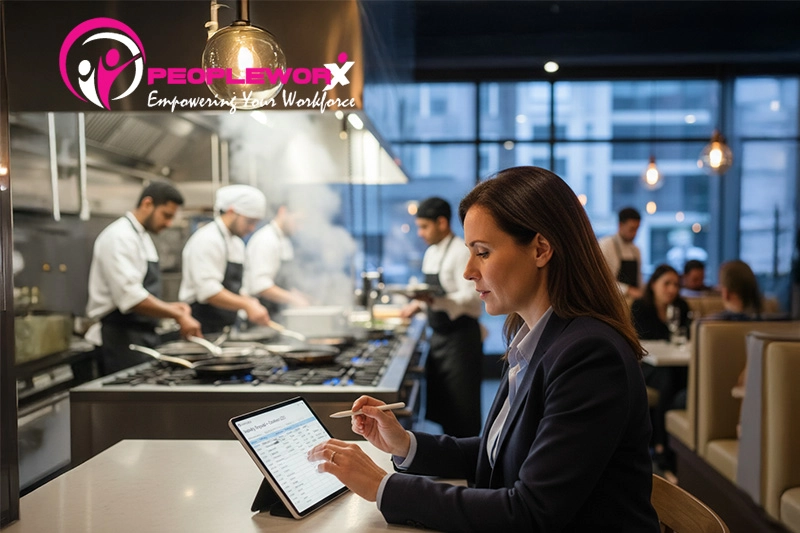
Restaurant payroll is often described as “complicated,” but that word doesn’t fully capture what’s really happening. Payroll in hospitality is a constant negotiation between operational reality and regulatory precision: last-minute schedule changes, shift swaps, split roles with different pay rates, tip pools, service charges, overtime thresholds, multiple locations, frequent onboarding, and managers who are trying to solve staffing problems in real time. When payroll is built on manual inputs and disconnected systems, even strong teams end up spending their time correcting rather than improving.
That’s why automated payroll systems have become a defining lever for restaurant operators who want to scale without increasing administrative burden and without accumulating hidden risk. The best reason to automate isn’t simply “saving time.” It’s creating a repeatable, auditable process that can keep up with the speed of restaurant operations while supporting fair pay practices and consistent compliance.
In short: payroll automation is not just a finance function upgrade. It’s an operational control system.
Content
- Why restaurant payroll breaks down so easily
- What an automated payroll system is (and what it should do in restaurants)
- The restaurant use case: why “general payroll automation” isn’t enough
- How payroll automation works in practice
- Why automation strengthens the employee experience (not just the back office)
- Manual Payroll vs. Automated Payroll, A Comparative Look
- What to look for in a restaurant payroll automation approach
- A critical thought-leadership point: payroll automation reduces errors, but HR risk starts upstream
- A practical framework for restaurants modernizing payroll
- Closing perspective: payroll automation is an operational maturity step
- Frequently Asked Questions (FAQ)
Why restaurant payroll breaks down so easily
If payroll were the same every period, it would be easy to standardize. Restaurant payroll is not. It is inherently variable by design, and many of the variables are high impact:
- A server works two job codes in one day (front-of-house and expo).
- A bartender covers a shift at a different location.
- A shift runs long and triggers overtime unexpectedly.
- Tip payouts shift based on staffing, sections, and tip pool rules.
- Managers approve timecards late, or “fix” time entries to match a schedule rather than actual hours worked.
When payroll depends on manual collection and ad hoc adjustments, each of those moments becomes a chance to introduce inconsistency. A few small inconsistencies create patterns, and patterns especially across multiple managers or locations, are exactly what regulators and plaintiffs’ attorneys look for when wage-and-hour issues arise.
Restaurants often don’t “choose” payroll risk. They inherit it through process drift: the slow erosion of consistent practices as a business grows, gets busy, turns over staff, or adds locations.
Automation helps because it makes payroll less dependent on memory, habit, and last-minute heroics and more dependent on configured rules and clean inputs.

What an automated payroll system is (and what it should do in restaurants)
At its core, an automated payroll system is a platform that collects time and pay data, applies pay rules, calculates earnings and deductions, withholds taxes, delivers pay (typically direct deposit), and generates records and reports. But in restaurant environments, the definition has to be more demanding.
A restaurant-ready system doesn’t just calculate pay. It reduces ambiguity by:
- standardizing the payroll process across managers and locations,
- capturing data closer to the source (timekeeping, scheduling, POS), and
- creating a record trail that supports reconciliation and audits.
This matters because restaurants don’t only need payroll to be fast rather they need it to be defensible. “We thought that’s how tips were handled” is not a strong position if documentation is unclear, approvals are inconsistent, or policy language doesn’t match reality.
The restaurant use case: why “general payroll automation” isn’t enough
Many industries can tolerate a payroll system that assumes consistent roles, predictable schedules, and stable headcount. Restaurants can’t. Restaurants need systems, as well as, it need processes that reflect how the work actually happens.
The most common restaurant complexity points include:
Multiple pay rates and blended work
A single employee may work different roles at different rates, sometimes within the same shift. That makes wage calculations and overtime calculations more complex than a straightforward hourly model. A payroll process that isn’t designed to handle role-based wages cleanly often forces managers into manual corrections, which is where errors and inconsistency are introduced.
Tip practices, service charges, and documentation
Tips are not just compensation; they are a compliance area. Whether a restaurant uses tip pooling, tip splitting, or different payout approaches, the key requirement is that the practice is consistent, documented, and supported by records. Automation can help move tip-related practices away from “tribal knowledge” and toward a defined workflow with better visibility.
Shift swaps, late approvals, and reality-based timekeeping
Restaurants operate in real time. People call out. Shifts extend. Managers fill gaps. When timekeeping approvals and payroll deadlines collide with the chaos of service, organizations get stuck in “fix it before payroll closes” mode. Automation helps by making approvals, exceptions, and corrections structured instead of improvised.
Multi-location scaling
The moment a restaurant becomes a group, consistency becomes the real challenge. Each location can develop its own habits—some fine, some risky. Automation supports central standards while allowing location-level operation.
How payroll automation works in practice
A useful way to understand payroll automation is to look at where it reduces friction:
- Hours and earnings flow from timekeeping and (where applicable) POS activity.
The goal is to reduce manual entry and reduce interpretation. The closer payroll is to verified, approved time data, the fewer opportunities exist for untracked changes. - Configured pay rules apply consistently.
Overtime rules, different pay rates, deductions, and other payroll logic should be configured so the system applies them predictably. This reduces the need for managers to “do math” under pressure. - Exceptions get flagged rather than hidden.
The value of automation isn’t only in what happens automatically; it’s also in what the system surfaces—missed approvals, unusual overtime, missing punch patterns, or items that require review. - A record trail is generated.
Payroll records are not just for accounting; they are operational and compliance artifacts. A clear trail of approvals and changes supports accountability and reduces confusion.

Why automation strengthens the employee experience (not just the back office)
Restaurant operators often underestimate how closely employees associate payroll accuracy with workplace quality. In a high-turnover environment, a single missed tip payout or incorrect check can have an outsized effect on trust. Employees may tolerate a lot in a fast-paced job, but pay accuracy is not one of the things people shrug off.
Automation supports a stronger employee experience by making pay outcomes more predictable and accessible. Self-service access to pay stubs, tax forms, and direct deposit updates reduces the number of “payroll desk” interactions that happen simply because information is hard to find. And when employees can see how hours, rates, and earnings were calculated, confusion decreases.
That employee experience point matters because turnover is not only a staffing problem; it’s a payroll and compliance problem. High turnover means more onboarding, more wage setup, more data entry, and more opportunities for documentation gaps.
Manual Payroll vs. Automated Payroll, A Comparative Look
Manual Payroll | Automated Payroll |
Manual entry of hours, wages, deductions, high risk of human error | Automatic data sync, calculations, deductions, consistent accuracy |
Time-consuming: hours or days per payroll run | Payroll processed in minutes |
Harder to ensure compliance, especially across locations or states | Built-in compliance logic and real-time updates |
Paper checks or manual bank transfers | Direct deposit / electronic payment, less paperwork |
Difficult for multi-location / multi-EIN businesses | Centralized payroll data, scalable and manageable |
For many restaurant businesses, the shift from manual to automated payroll isn’t just an upgrade, it’s a transformation that unlocks new levels of operational efficiency, compliance, and growth readiness.
What to look for in a restaurant payroll automation approach
Restaurant operators evaluating payroll systems often focus on feature lists, but a more useful lens is: Does the system reduce variability, or simply move variability into another place? The following areas tend to be the difference between “automation” that truly reduces workload and “automation” that still requires manual repair work.
Integration that reduces re-entry, not just “connectivity”
POS and timekeeping integrations are often marketed as a checkbox, but the real question is whether integration meaningfully reduces reconciliation. If managers still need to manually interpret or re-enter core inputs, the organization isn’t getting the full benefit.
Tip handling and audit-friendly records
Tip pooling/splitting and service charge approaches must be supported in a way that creates clarity. Restaurants benefit when tip workflows are documented and repeatable rather than dependent on whichever manager is working payroll that week.
Multi-location standardization with the right level of control
Multi-location payroll is successful when the organization can centralize standards (policies, approval timing, workflows) while allowing locations to operate day-to-day without workarounds.
Pay-rule flexibility that matches restaurant reality
Restaurants need flexibility around multiple job codes, different pay rates, overtime, and other practical pay scenarios. When systems can’t accommodate real operations, managers compensate with manual work—often the biggest source of errors.
A critical thought-leadership point: payroll automation reduces errors, but HR risk starts upstream
Payroll automation is powerful, but it’s not a substitute for good HR foundations. Many wage-and-hour issues are created before payroll ever runs, including:
- unclear policy language that doesn’t match daily practice,
- inconsistent onboarding and documentation,
- informal manager decisions that create “unwritten rules,”
- shift management habits that unintentionally trigger compliance exposure,
- inconsistent treatment across locations.
Automation can process what it receives, but it can’t automatically fix upstream decisions. That’s why the most effective organizations pair payroll automation with an HR discipline lens that is ensuring that policies are clear, manager behaviors are aligned, and documentation practices are consistent.
In restaurants, “we didn’t mean to” is rarely a strong defense. What matters is what actually happened, whether it was consistent, and whether it was documented.
A practical framework for restaurants modernizing payroll
If you’re upgrading payroll technology, consider using a simple three-part approach that creates both operational efficiency and risk reduction:
1) Standardize the process before you scale it
Define what “good payroll” means across locations: approval timing, exception handling, timekeeping expectations, and tip documentation. Technology performs better when it reflects a clearly defined process.
2) Use automation to surface exceptions, not hide them
The goal is not to eliminate human review; it’s to focus human review on what matters. Exception-based workflows (missing approvals, unusual OT, repeated missed punches) build control without slowing the business down.
3) Validate HR foundations as part of payroll modernization
Payroll modernization is an ideal time to examine wage-and-hour exposure, documentation habits, and policy alignment especially around tips, overtime, scheduling, and onboarding.
If you want a fast way to assess where gaps might exist, the HR Risk Assessment can help identify the policies and practices that most often create exposure in real-world operations.
For additional guidance on strengthening HR processes that support compliance and workforce stability, visit the HR micro-site.

Closing perspective: payroll automation is an operational maturity step
Restaurants adopt payroll automation for the promise of efficiency, but the deeper value is maturity: fewer ad hoc fixes, more consistency, and a payroll operation that can keep pace with the business. For multi-location operators, that consistency is often the difference between controlled growth and growth that quietly accumulates risk.
Payroll modernization isn’t just about paying people. It’s about building a reliable system that supports the workforce, reinforces trust, and protects the business as it scales.
See how automated payroll can simplify your restaurant operations
Frequently Asked Questions (FAQ)
1. What exactly does an automated payroll system do for restaurants?
An automated payroll system streamlines how restaurants calculate wages, manage tips, process taxes, and distribute employee pay. It automatically pulls in time and attendance data, applies restaurant-specific pay rules (like tip credits and overtime), and ensures compliance, saving time and reducing errors compared to manual payroll.
2. Can an automated payroll system handle multiple restaurant locations?
Yes. A modern payroll platform can consolidate data across several locations, support different POS systems, manage separate EINs, and apply the correct state and local tax laws. This ensures consistent payroll and reporting across your entire restaurant group.
3. How does payroll automation help with tip management and tip-credit compliance?
A strong payroll solution can automatically distribute pooled tips, track tip credits, apply service charges correctly, and generate necessary tip reports. It also ensures compliance with federal, state, and local tip laws, critical for avoiding wage violations.
4. Is payroll automation expensive for small or mid-size restaurants?
Not usually. While there is a software cost, restaurants typically save more through reduced payroll admin time, fewer compliance penalties, and greater accuracy in labor cost tracking. Most restaurants see a fast return on investment, especially those with hourly staff, high turnover, or multiple locations.
5. What features should restaurants look for when choosing a payroll system?
Key features include POS/timeclock integration, multi-location support, tip and tip-credit automation, direct deposit, benefits management, role-based access, strong reporting tools, and the flexibility to manage wage rules, scheduling, and tax compliance.
6. Will payroll automation replace my HR staff?
Not entirely. While automation dramatically reduces payroll processing time and eliminates manual tasks, HR still plays an important role in hiring, onboarding, compliance, employee relations, training, and culture-building. Automation strengthens HR, it doesn’t replace it.
See how multi-unit groups cut payroll time ~60% with automation. Switch Payroll Providers
If you need help with workforce management, please contact PeopleWorX at 240-699-0060 | 1-888-929-2729 or email us at HR@peopleworx.io
Automation Cut Your Payroll Time, But What About HR Risk?
Automated Payroll Systems: A Smarter Approach to Payroll Management for Restaurants boosts POS sync, tips, and filings, yet HR risk lingers. Tip credit, overtime, minors, breaks, I-9, docs, contractors. Our HR Risk Assessment flags exposure and next steps, before claims or back pay.
Take Your HR Risk Assessment →